Brand Identity and Events in the Industrial Sector: How to Turn Trade Shows and Meetings into a Strategic Positioning Tool
In the industrial sector, trade shows, open houses, meetings, and product launches are not merely opportunities for visibility. They are strategic moments when a company showcases its technical expertise, strengthens business relationships, and reinforces its market position. In this context, brand identity plays a decisive role: if it is consistent with the venue, content, and communication, the event becomes a concrete tool for building credibility and differentiation.
In this article, we’ll explore how to develop a brand identity strategy tailored to industrial events, using a practical and actionable approach that will be helpful for those considering working with a communications agency.
Table of Contents
Why brand identity is crucial in the industrial sector
In industrial B2B, purchasing decisions are rational, technical, and often complex. However, this does not mean that the brand matters any less. On the contrary, when two companies offer solutions that are similar in terms of quality and price, perception is what makes the difference. Reliability, solidity, clarity, and the ability to innovate are also conveyed through brand identity.
Brand identity is more than just a logo. It is a cohesive combination of:
- Visual elements such as colors, typography, and graphic style
- Language and tone of voice
- Stated and proven values
- How the company presents itself at various touchpoints
An event is one such touchpoint, and in the business world, it is often one of the most important.
Industrial events and positioning: what’s at stake?
Trade shows, meetings with distributors, factory open houses, and presentations of new product lines: every event conveys something about your positioning.
If your brand positions itself as innovative but your booth is generic and poorly designed, your message loses its impact. If you talk about precision and quality but your materials and messaging seem slapdash, you create a disconnect.
A well-organized industry event:
- It reinforces the perception of technical expertise
- It conveys organizational strength
- Leverage internal expertise
- Increase brand recall among buyers and partners
This isn't about putting on a show. It's about strategic consistency.
From Strategy to Event: The Right Approach
Many companies start with logistics: they choose the trade show, book the space, and set the budget. The communication aspect comes later, but the process should be the other way around.
First, define the following:
- Purpose of the event
- Specific target
- Key message
- Position to be strengthened
Only then arethe layout, materials, content, and digital media designed. A communications agency specializing in the industrial sector focuses precisely on this step, translating strategy and identity into a tangible experience.
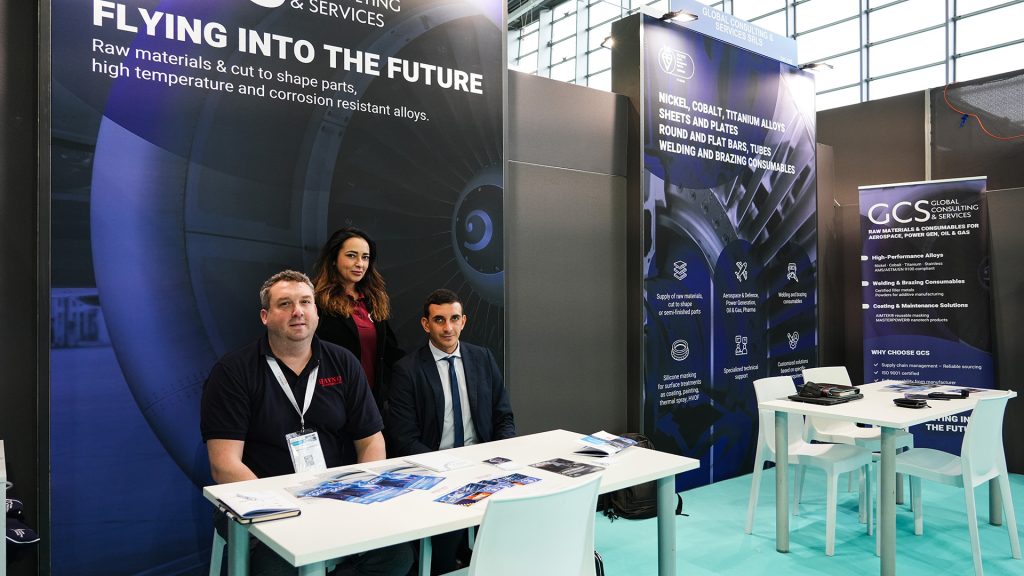
Find out how we transformed GCS’s trade show presence into a cohesive event graphics system designed to strengthen its brand identity, visibility, and market positioning.
The elements that make an industrial event cohesive
Visual identity applied to the space
Colors, materials, graphics, signage, walls, roll-ups, technical panels, demo machines: everything must speak the same visual language.
In the industrial sector , the importance of design is often underestimated, with the assumption that simply displaying the product is enough. In reality, the environment in which the product is presented also contributes to the perception of quality. A well-organized booth, with clear visual hierarchies and legible messages, conveys method and precision.
Structured technical content
Brochures, product sheets, technical videos, presentation slides. It’s not enough to simply include information; you need a structure to guide the reader.
- Customer issue
- Proposed solution
- Tangible benefits
- Tests and Use Cases
Here, too, the brand identity is reflected in the way the information is organized.
Consistent tone of voice
The language should be technical yet accessible. Authoritative, but not self-referential. Invitations, follow-up emails, speakers’ remarks, and signage copy: everything must maintain the same level of clarity and expertise.
In the industrial B2B sector, an abundance of vague promises breeds mistrust. Precision builds trust.
The experience before, during, and after the event
Brand identity isn't limited to trade show days. Other factors also matter:
- The teaser campaign announcing the participation
- Managing collected contacts
- Sales follow-up
- Post-event content
If the process is fragmented, the impact is diluted. If it is coordinated, the event becomes part of an ongoing strategy.
If you’re planning your next trade show or corporate meeting, we can help you turn it into a powerful branding tool. We analyze your brand identity, materials, content, and physical presence to create an event that is cohesive, distinctive, and commercially effective.
Common mistakes in industrial companies
In the industrial sector, events are often managed with a strong focus on technical and logistical aspects, but with little strategic integration. This creates inconsistencies that, over time, weaken the brand’s image.
One of the most common mistakes is to treat a trade show as a standalone event. Companies book a booth, update their stand design, and reprint brochures, but there’s no overarching theme. It’s unclear what key message they intend to convey or what brand positioning they aim to reinforce.
Another common mistake involves operational fragmentation. Graphics are outsourced to one vendor, design to another, technical content is managed in-house, and videos are commissioned from a third-party partner. Without shared guidelines, the result is often inconsistent: slightly different colors, inconsistent fonts, and messages written in different styles. These details, taken together, convey a lack of cohesion.
Then there is the issue of technical materials. Many industrial companies produce brochures packed with data, tables, and specifications. The information is accurate, but it is difficult to read and lacks a clear structure. At a trade show, time is limited: if the content doesn’t guide the reader, the opportunity is lost.
Another critical issue is the lack of integration with the sales department. Contacts are collected, but they are not always categorized strategically. There is no coordinated follow-up plan between marketing and sales. The event generates leads, but it does not always generate concrete opportunities.
Finally, there is a more subtle mistake: failing to update your image as the company evolves. New machinery, new certifications, new markets. If your trade show presence remains unchanged for years, a gap emerges between actual innovation and external perception. In industrial B2B , perception matters just as much as technical expertise.
Event brand kit: a practical tool for industrial companies
To avoid confusion and inconsistency, a clear system is needed. The event brand kit was created precisely for this purpose. It is not a theoretical document, but a practical tool that enables the marketing and sales departments, as well as suppliers, to work toward a common goal.
In an industrial context, this may include:
- Visual guidelines for the event
Guidelines on the use of the logo, its proportions, clearance areas, and color variations as applied to panels, displayed machinery, signage, and printed materials.
- Official color palette and typography
Technical specifications for large-format printing, trade show materials, and digital media. This ensures consistency across booths, brochures, and presentations.
- Template for technical content
Templates for product sheets, case studies, and sales presentations. This ensures that even complex information maintains visual consistency and a clear hierarchy.
- Guidelines for Images and Videos
Photographic style, framing, graphic design of technical videos, methods for inserting data and animations.
Guidelines for pre- and post-event communication
Format of the invitation email, dedicated landing page, follow-up messages, and structure of communications on LinkedIn or in newsletters.
The practical benefit is twofold. On the one hand, it reduces errors, revisions, and the time needed for coordination between departments. On the other hand, it reinforces the perception of organization and reliability—two core values for any industrial company.
A well-designed event brand kit also allows you to replicate the model across multiple trade shows or meetings throughout the year, adapting it to different markets without compromising consistency. In short, it’s not an additional cost—it’s a strategic management tool.
For an industrial company that regularly attends trade shows and organizes events with customers or distributors, this can make the difference between an ordinary presence and a distinctive one.
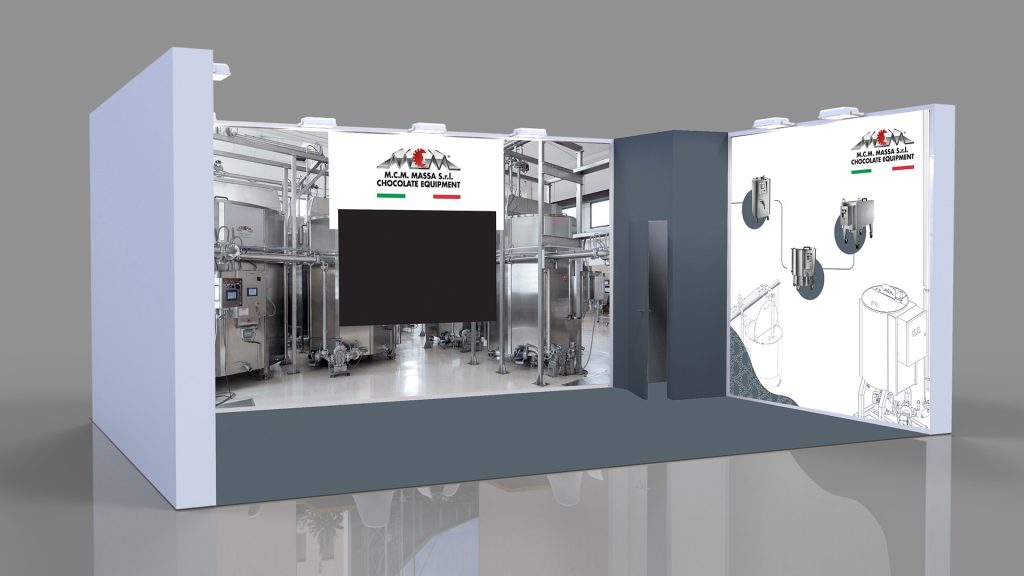
Discover the MCM Massa project: an initiative designed to turn trade shows and industry events into concrete opportunities for visibility and positioning.
Why Choose a Communications Agency Specializing in Industrial B2B
Industrial communication has its own specific dynamics:
- Long sales cycles
- Multiple decision-makers
- Strong technical component
- The need for credibility and clarity
A general-purpose agency can handle the visual design.
An agency with experience in the industrial sector focuses on search engine optimization, content structure, technical consistency, and sales support.
Value is not only creative, but also strategic. It means:
- Analyze the existing brand
- Set measurable goals for the event
- Designing a visual identity and consistent materials
- Integrate the event into the annual marketing plan
In this way, the trade show or conference is not a one-off event, but part of the brand’s growth journey.
When it’s time to revamp the brand identity of your events
It might be the right time if:
- Your image at the trade show has remained the same for years
- Competitors are investing more in presentation
- The materials do not reflect the company's technological evolution
- The sales department is struggling to stand out
In the industrial sector, innovation isn't just technical. It's also about communication.
Conclusion
In the business world , credibility is built over time. Every event is an opportunity to strengthen or weaken it. A consistent brand identity, strategically applied at trade shows and meetings, helps to:
- Increase brand recognition
- Convey reliability and expertise
- Provide practical support to the sales department
If you’re planning your next trade show or corporate event and want to turn it into a real marketing tool, the first step is to assess the consistency between your brand identity and your physical presence.
We can help you achieve this through a structured approach designed for industrial companies seeking solid, measurable growth.
Contact us for personalized advice on your next event.